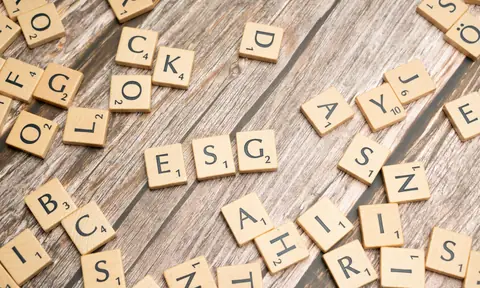
A puzzle can make you feel pleasantly alert without proving that it improves your health. That distinction is easy to lose when a game score rises beside a headline about brain training. You may genuinely become better at recognizing a letter pattern, recalling a card location, or navigating an interface. The additional claim that this improvement transfers to everyday cognition is a different proposition and needs different evidence. Enjoyment does not have to carry the weight of a medical promise.
This article is an evidence-literacy guide for puzzle players, not clinical advice. It does not prescribe a training schedule, assess an individual's memory, or claim that an OnlinePuzzle game prevents disease. The examples below are hypothetical reading exercises. We use public research and agency guidance to frame the questions, then show how to inspect a claim without turning a promising result or a personal success story into a universal conclusion.
Translate the headline into a specific claim
Make your brain sharper is difficult to evaluate because sharper can mean many things. Does it refer to faster responses on a practiced screen, better performance on a different test, fewer mistakes in daily tasks, or a clinical outcome measured years later? Write the exact proposed benefit in ordinary language. If the claim changes when you ask for a measurement, you may be looking at a marketing impression rather than a testable statement.
Consider an invented advertisement saying that ten minutes of a matching game improves memory. Ask what the participants remembered, how improvement was scored, and when it was measured. A result involving the same pictures immediately after practice cannot by itself establish that someone will remember appointments more reliably next month. Both outcomes concern memory in everyday speech, but they are not the same measurement. The gap between them is where careful interpretation begins.
Separate task learning from transfer
Task learning means becoming better at the activity you practiced. Transfer concerns performance beyond that activity. The review by Simons and colleagues linked below examines the evidence behind brain-training programs and distinguishes improvement on trained tasks from broader outcomes. Our practical use of that distinction is simple: ask whether the claimed benefit was measured on the game itself or on an independent task that matters to the reader.
For an original example, imagine a player whose matching score rises from 40 to 60 points after repeated practice. They may have learned the images, the controls, a useful search pattern, or the timing of animations. The score increase is real within the example. It does not identify which explanation caused it, and it does not establish a change in unrelated abilities. A stronger interpretation would need measurements designed to distinguish those possibilities.
Read a before-and-after story cautiously
Suppose a hypothetical participant completes a puzzle in eight minutes on Monday and five minutes on Friday. That change may be encouraging, but a single before-and-after record does not isolate why it occurred. The Friday puzzle may be easier, the player may understand the interface better, or the conditions may differ. Write those alternatives beside the appealing explanation rather than assuming that one improvement has already demonstrated its cause.
A comparison group can help answer a more specific question, but the comparison must be relevant. Comparing a stimulating game with doing nothing differs from comparing it with another engaging activity. The participants' expectations and the time spent can matter to interpretation. You do not need to be a statistician to ask what the other group did. The question often reveals whether the result supports the headline's broad claim or only a narrower contrast.
Look for outcomes that match the promise
If a product promises better everyday functioning, a report limited to a proprietary game score is not enough to establish that promise. If it claims a durable benefit, an immediate post-session test leaves durability unanswered. If it implies a benefit for all ages, a study in one specific population cannot automatically represent everyone. These are questions of fit between evidence and claim, not reasons to dismiss a study before reading it.
Imagine a study description saying that participants improved on a practiced symbol task. A fair headline would retain that task and the relevant conditions. Rewriting the result as puzzle players become smarter removes the boundaries that made the original statement meaningful. When reading a summary, compare its nouns and time frame with those in the underlying report. Changes from a specific task to general intelligence should prompt a closer look.
What public guidance says about commercial games
The National Institute on Aging cautions that evidence about structured cognitive training should not be treated as proof that commercially available brain-training applications have the same effects. That is a distinction between a studied intervention and a broad product category. A game sharing words such as memory, speed, or reasoning with a research program does not establish that it reproduces the program's design, intensity, supervision, or measured outcomes.
The useful reader response is to ask which exact intervention was studied and how closely the offered product matches it. A familiar scientific term is not a substitute for that comparison. This article does not attempt to rank commercial products or infer their effects from visual similarity. It also does not conclude that every possible game-based intervention is ineffective. Absence of support for a broad claim and proof of no effect are different conclusions.
A historical warning about oversized promises
In January 2016, the Federal Trade Commission announced a settlement over allegations that Lumosity advertising made unsupported claims about broad benefits. The case is a documented historical example of the distance that can open between promotional language and substantiation. It should not be presented as a new 2026 enforcement action or as an automatic judgment about every current product using the phrase brain training.
The lesson for a reader is to inspect the wording rather than rely on an impressive label. Scientifically designed, researched, and clinically proven do not necessarily describe the same kind of evidence. Ask what was tested, who participated, which outcome changed, and whether the conclusion matches the actual advertisement. A research citation on a sales page is the beginning of that inquiry, not its completion.
Distinguish a percentage from a useful result
A hypothetical headline might say that performance improved by 20 percent. That sounds substantial until you ask what changed from what starting value. Moving from five correct items to six is a 20 percent relative increase, but it is also one additional item on that particular test. Neither description is inherently dishonest. The important point is that the percentage alone does not tell you the scale, uncertainty, or practical meaning of the result.
Ask how many participants contributed to the estimate, how much their results varied, and whether the outcome was selected in advance. This guide does not provide numerical thresholds for declaring a study good or bad. Study quality cannot be reduced to one sample-size cutoff. Instead, use the missing details as a list of questions to take to the original report or to a qualified explanation of it.
Personal enjoyment remains a legitimate reason to play
You do not need a claim about disease prevention to justify a satisfying daily puzzle. A game can be enjoyable, social, aesthetically pleasing, or a welcome break. Those are experiences you can describe without converting them into clinical outcomes. I like solving this with my family is a complete reason to enjoy it. It does not require claiming that the activity has been shown to improve every participant's cognition.
Be equally careful with a bad session. A slow solve, an unfamiliar word, or a lost matching round is not a diagnostic test. Game difficulty, vocabulary, interface comfort, interruptions, and mood can all change the experience. If a puzzle ceases to be enjoyable, taking a break is an ordinary leisure choice. Persistent concerns about memory or functioning belong in a conversation with a qualified healthcare professional, not in an interpretation of a game leaderboard.
Make a small evidence card for a claim
Before sharing a dramatic brain-game headline, write five fields: the exact claim, the source, the participants, the measured outcome, and the follow-up period. Add a sixth field for what the source does not establish. This turns a vague debate into a compact reading exercise. If a field is unavailable, mark it unknown instead of filling it with an assumption borrowed from the headline.
For our invented matching-score example, the card would say that a player's game score rose during practice. The source is a hypothetical observation, the participant count is one, the outcome is a game score, and the follow-up is unspecified. The card cannot support a population health claim. Its value is exposing that limitation clearly while preserving the modest fact it was designed to illustrate: performance on the practiced task changed.
How this article was prepared
We separated agency guidance, a research review, and a historical regulatory example from our own hypothetical scenarios. The cited sources have different roles. NIA frames the limits of extrapolating from studied training; the review discusses the research landscape; the FTC record documents a particular advertising case. None is presented as an endorsement of OnlinePuzzle or a certification of its games. No clinical review by a medical professional is claimed.
We did not run a trial, collect health data, measure long-term outcomes, or systematically review every study published through 2026. The article therefore offers a method for reading claims rather than a comprehensive medical conclusion. Sources and their dates should be checked when a specific health decision depends on them. A puzzle website's editorial guide is not an appropriate substitute for personalized professional advice.
Keep the claim as precise as the evidence
The next time a brain-training headline appears beside your daily game, pause before accepting or rejecting the entire category. Translate the promise, identify the actual measurement, and look for the missing step between the study and the sales language. You may find a worthwhile narrow result, an unresolved question, or a claim that reaches much further than its support. Each deserves a different response.
Good puzzle solving and good evidence reading share one useful habit: do not let a satisfying story outrun the clues. Enjoy the game for what it gives you directly. When someone promises more, ask for evidence that measures more. That preserves the pleasure of play while keeping medical certainty where it belongs, with carefully defined research and appropriately qualified guidance.