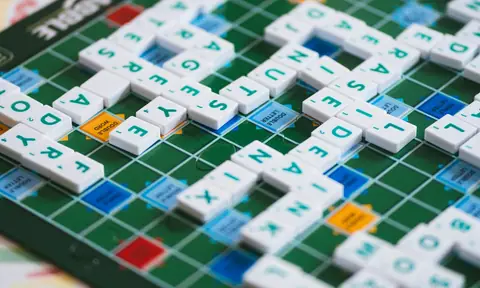
Connections-style puzzles reward a peculiar kind of restraint. You can spot a convincing relationship among four words and still be wrong, because the remaining twelve words may no longer divide cleanly. The challenge is larger than finding a true association. You must find a complete arrangement in which every tile belongs somewhere and no tile is borrowed by two groups. That distinction explains why an apparently obvious opening can become an expensive dead end.
The New York Times help page describes Connections as grouping sixteen items into four sets with shared relationships. This guide borrows that general structure for an original teaching board. It does not reproduce a published daily puzzle, give today's answers, or claim that the publisher uses the same construction process. Our purpose is to make ambiguity inspectable: identify a tempting association, test its boundaries, and decide whether it deserves a submission.
Read the whole board before naming the first group
An original miniature case contains these sixteen words: BASS, CARP, PERCH, PIKE, ALTO, TENOR, SOPRANO, BARITONE, BAT, GLOVE, MITT, HELMET, MAPLE, CEDAR, BIRCH, and ELM. The intended groups are fish, vocal ranges, baseball equipment, and trees. That sounds easy until you notice that BASS also names a vocal range. It can join a plausible singing group while still being essential to the intended fish group.
This is a local ambiguity with a global consequence. Selecting BASS, ALTO, TENOR, and SOPRANO might feel defensible, but it strands BARITONE and removes the fourth fish. The correct response is not to argue that bass cannot describe a voice. It can. The question is whether this particular grouping allows a complete solution for the entire board. Relationships are evaluated inside a constrained puzzle, not as isolated dictionary facts.
Build candidates, then test their competition
Before submitting, state the relationship as a short label that explains all four words equally. Fish is a clearer label than things connected with water, because it is more specific and gives each member the same role. Next, look for a fifth tile that also fits. A fifth plausible member is a warning that the category may be incomplete, too broad, or entangled with a different category.
In the teaching board, the singing set has five plausible members if BASS is included. The fish set has only four. That difference supplies useful leverage. You can preserve the unique fish group and then use the remaining four vocal ranges together. This is a constraint argument. It does not require guessing which category color the editor considers difficult, and it does not depend on a hidden ranking of word familiarity.
Use a counterexample before spending a mistake
Imagine proposing BAT, GLOVE, MITT, and HELMET under the label things worn during baseball. BAT breaks the wording because a bat is normally used rather than worn. The broader label baseball equipment fits all four cleanly. This may look like a minor wording edit, but writing an exact category prevents you from quietly changing the relationship for one inconvenient member. The phrase should remain stable from first tile to fourth.
A good counterexample asks whether one item is included only through a special explanation. If three words are ordinary musical terms and the fourth is the name of a musician's dog, the relationship is uneven unless the puzzle explicitly signals that kind of reference. Specific cultural knowledge can be valid, but it should not be manufactured after the selection. Treat a complicated rescue story as evidence that the candidate group needs another check.
Distinguish meanings, phrases, and transformations
Not every relationship is a direct category such as fish. A puzzle can link words through a shared phrase, a changed letter, a sound, or a visual feature. Keeping these mechanisms separate helps you search systematically. First check direct meanings. Then inspect common expressions and compound words. Only after that should you spend serious effort on letter manipulation or obscure sound-alike links.
For an invented phrase set, consider CREAM, SKATE, PACK, and CUBE after ICE. The mechanism is a shared word placed before each tile, not a general category of cold things. ICE SKATE and ICE CREAM are ordinary combinations, while each complete phrase must still be checked. A plausible phrase for three tiles does not license inventing an unnatural phrase for the fourth. The exact language of the connection remains part of the evidence.
Why a near miss is information, not a verdict on ability
Some interfaces report that a submitted set is one item away from a correct group. Read that feedback literally and cautiously. It means your chosen set has a particular relationship to a solution group under that game's rules. It does not reveal which item is wrong, which outside tile should replace it, or whether another strong association you noticed is relevant. Swapping randomly wastes the feedback.
Write the four selected tiles in a temporary row. Beside each one, list the role it plays in your proposed label. Then inspect the unused tiles for a cleaner member. In the BASS example, BARITONE is an immediate competitor for a singing set, but the more useful insight is preserving BASS for fish. The strongest revision may involve abandoning the original submission entirely rather than replacing exactly one tile and hoping.
Protect scarce words first
A scarce word is not necessarily a rare word. It is a tile with few credible homes on the current board. BARITONE is common enough to recognize, yet it has a narrower useful role here than BASS. That makes its surrounding category informative. Similarly, an unusual suffix or a highly specific object can anchor a group when more flexible words create several competing stories.
Use scarcity as a search aid, not a law. A seemingly narrow word might have a familiar secondary meaning that you have overlooked. When a candidate group depends on a specialized definition, check a dictionary after finishing or in a mutually agreed practice session. During competitive play, follow the established rules about outside references. A method is only comparable across players when the allowed assistance is clear.
A paper workflow that keeps alternatives visible
Draw four empty boxes below the board. Put strong proposed groups into boxes lightly, using pencil or removable notes. Do not erase the original sixteen-word list. Mark overlapping candidates with a small dot rather than forcing an immediate choice. This preserves the distinction between a hypothesis and a committed answer, which an on-screen selection can blur when highlighted tiles look reassuringly final.
Before submitting a group, make one complete hypothetical partition of the remaining tiles. It can be rough, but every tile must have a proposed home. If two different partitions appear possible, compare the exactness of their labels and the number of special explanations each needs. The partition requiring fewer exceptions is often the better working hypothesis. It is still a hypothesis until the game's feedback confirms it.
Practice the move that prevents the obvious mistake
Use the sixteen-word teaching board without looking back at the intended groups. Time is optional. First write the first association you notice. Then record the competing group that could use one of its tiles. This second record is the key exercise. You are training yourself to search for conflicts before submitting, rather than congratulating yourself as soon as a connection appears.
After solving, explain the board to another person in two passes. In the first pass, name the four intended labels. In the second, describe why BASS is the useful distractor and why the vocal grouping should exclude it. A clear explanation distinguishes the truth of a dictionary association from the constraints of a complete solution. If that distinction is difficult to articulate, revisit the partition rather than memorizing the final arrangement.
Shared knowledge can help without turning into a spoiler
When playing with someone else, ask for observations before conclusions. One partner might say that a word has a musical meaning while another notices a family of fish. These observations can coexist. Announcing a complete group too early can anchor everyone on one interpretation, especially if the most confident person speaks first. Invite a competing reading before the group spends an attempt.
Agree on the kind of help you want. A nudge about a mechanism, such as look for compounds, preserves more discovery than naming all four members. When sharing after solving, describe the reasoning without posting the tile list in a notification preview. A daily puzzle remains enjoyable partly because other people have not already made its final arrangement unavoidable. Consider the reader who opens the message several hours later.
Evidence, uncertainty, and the scope of this guide
Our data consists of one openly specified teaching board and its intended partition. The board was constructed to expose a single overlapping word; it is not a sample from published Connections puzzles. It cannot establish how frequently red herrings appear, whether a particular solving order is statistically best, or how any player's results will change. Those questions would require a larger documented dataset and a defined evaluation procedure.
What the example does show is a repeatable diagnostic: check the label, seek a competing member, and verify that the leftovers can still form complete groups. That turns a vague feeling of certainty into a statement someone else can challenge. In a game built around ambiguous words, the strongest move is often the moment you pause before selecting the four tiles that seemed obvious.
Test the rule by changing one tile
Replace BARITONE in the teaching board with SALMON. The previous four-by-four partition no longer works as stated: the fish family now has an extra member, while the intended vocal group lacks one. Do not repair the exercise by quietly inventing a new meaning for SALMON. State that the board has changed and that the original solution is no longer a valid complete partition. This is a useful construction check as well as a solving lesson.
A puzzle editor can perform the same exercise deliberately. Remove one tile, propose a replacement, and ask whether the board still has the intended clean explanation. If several equally natural complete partitions survive, the puzzle may need another revision or a rule clarifying the intended mechanism. That does not prove a published board is defective when you notice one broad association. It shows why a complete competing partition is stronger evidence than a complaint about a single word's secondary meaning.