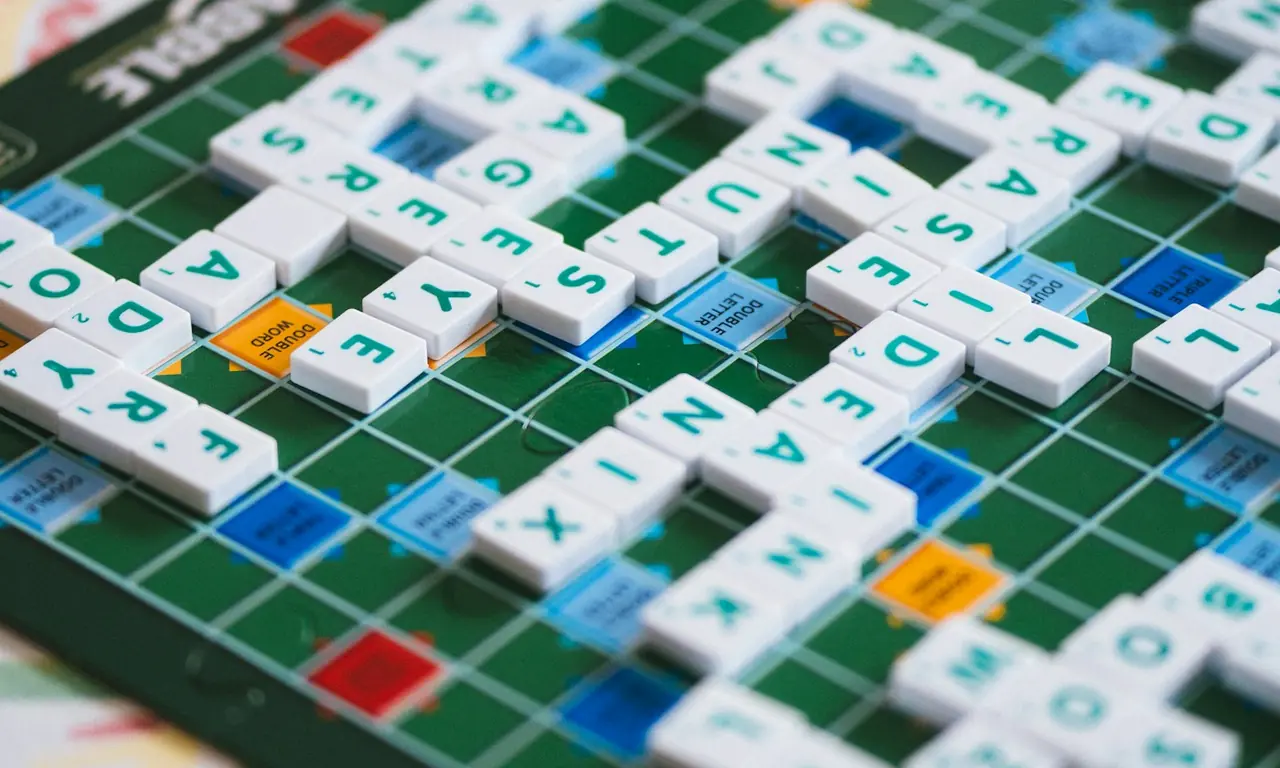
Crossplay brought a familiar social question into the daily-puzzle conversation in 2026: what changes when the person across the board can answer back? The New York Times announced the game on January 21 as a two-player word game in a separate app. That verified launch is the starting point for this guide, not evidence that every puzzle player has moved to multiplayer or that a particular strategy is dominating the rankings.
A shared board adds a kind of uncertainty that a hidden-word puzzle does not have. Your move changes what another person can do next. A high score can be attractive while opening a favorable reply. A modest score can preserve a useful option for your following turn. This guide explains how to reason about that tradeoff using original, simplified decision examples. The arithmetic is visible, and no example claims to reproduce Crossplay's exact board, tile distribution, scoring rules, or current matchmaking system.
First establish which game you are analyzing
Two word games can share letter tiles and still require different decisions. Board dimensions, bonus squares, exchange rules, accepted dictionaries, and end conditions all affect strategy. Read the in-app rules before applying advice borrowed from another game. In particular, do not assume that a familiar bonus rule or a move calculator built for a different board has the same meaning in Crossplay. Similar appearance is not a reliable rules reference.
The official launch announcement establishes the two-player, word-building premise and describes social features. It does not justify treating the game as interchangeable with every established tile game. The distinctions in this article are analytical questions to bring to your next session. They remain useful even when a rule changes, because they ask you to identify the relevant constraints instead of memorizing a move from an outdated screenshot.
A score is immediate; a position has a future
Consider a deliberately abstract position with two legal options. Move A earns 28 points and creates a wide opening. Move B earns 22 points and leaves the board more restricted. If the next opponent reply were known to score 30 after A but only 12 after B, the two-turn score differences would be minus two and plus ten respectively. Looking only at your immediate score would favor the inferior two-turn result in this constructed example.
Real opponents do not provide their next move in advance. You need scenarios rather than certainty. Suppose the larger reply after A is merely plausible, not guaranteed. List a quiet reply, an ordinary reply, and a strong reply for each move. The point of the exercise is to expose risk. It does not produce a reliable expected value unless you also have defensible probabilities for those scenarios, which an ordinary player often does not.
Examine the opening you leave behind
After finding a playable word, pause and view the board from the other side. Which new letters or spaces can your opponent use? Does your placement create a long extension lane? Does it connect previously separate regions? Are you making it easier for a short word to reach a valuable position? These questions are more useful than the vague instruction to play defensively, because they identify actual consequences of a proposed move.
A simple paper exercise makes this concrete. Sketch a legal-looking position from a practice game without recording any private opponent information. Draw your planned addition in a second color. Circle the spaces that become newly playable. Then describe the most obvious reply in one sentence. The sketch does not need to enumerate every dictionary word. It needs to reveal the difference between the score you receive and the opportunities you create.
The letters you keep deserve attention
A move uses some resources and preserves others. Imagine an invented rack containing A, E, R, T, S, X, and Q. One hypothetical move might score well while leaving only awkward consonants; another might leave a more flexible mixture. The useful observation is that the remaining rack affects your next turn. The actual value of each letter depends on the game's tile rules and on the board, so a universal numerical value would be misleading.
Review the leave as a small planning problem. Can you form several short possibilities from the retained letters? Are you depending on one narrow draw? Have you preserved a combination that works in more than one part of the board? This is not an argument against using difficult letters. A difficult tile can be valuable when a suitable opening exists. The mistake is assessing a turn without considering what the turn leaves you able to do.
Compare moves using the same assumptions
When two candidates are close, write a small decision table with immediate score, retained letters, new openings, and likely reply families. Use ordinary descriptions such as flexible, narrow, open, and restricted when you cannot justify a number. A qualitative note that is honest about uncertainty is better than a precise-looking score assembled from guesses. The table's job is to organize reasoning, not decorate a hunch with mathematics.
Avoid comparing an optimistic story for your preferred move with a pessimistic story for its rival. If you assume a strong opponent reply after one move, consider a strong reply after the other. If you assume a lucky future draw in one branch, acknowledge that the luck is doing work. Consistent assumptions make the comparison useful even when the final choice remains uncertain. They also make postgame review far less vulnerable to hindsight.
Turn order changes the value of patience
In a solitary puzzle, taking longer usually changes only your own experience, unless a timer is part of the rules. In multiplayer, the pace can affect another person. Agree on expectations when playing with friends. Some people enjoy analyzing a turn carefully; others expect quick exchanges. Neither preference is inherently more serious. Friction begins when the players believe they are taking part in different kinds of session.
Check whether the game offers a timer or particular turn limits rather than inferring one from a message notification. A notification is an invitation to return, not proof that a response must be immediate. When discussing a match, distinguish a slow decision from an abandoned game. Good communication protects the social value of the session, especially when one person is learning vocabulary and another has years of board-game experience.
Review a decision without rewriting its history
After a loss, it is easy to call a risky move foolish simply because the opponent found a powerful reply. Save the reasoning you had before the result. Did you recognize the opening? Did you compare a safer alternative? Were you accepting a sensible risk because you were behind? A decision can be reasonable under uncertainty and still lead to an unfavorable outcome. An unexamined lucky win can teach a worse lesson than an analyzed loss.
A useful review has three columns: information available at the time, choice made, and information learned afterward. Keep them separate. If a postgame tool suggests a stronger word, check whether that word was in your usable vocabulary and whether the tool applies the game's current rules. The recommendation can become a learning opportunity without becoming proof that you should have seen an unfamiliar word immediately under different conditions.
Learn vocabulary in context rather than as a trophy list
Collect words that solve problems you actually encounter. If short connecting words repeatedly open the board, study a small set in the approved dictionary. Record a meaning or example alongside each spelling. If the same troublesome letter remains on your rack, look for a handful of legitimate patterns that use it. This produces a vocabulary notebook tied to decisions instead of an impressive list you cannot retrieve during play.
Check disputed words through the game's official dictionary or support materials when available. Do not transfer a word from a social post and assume it is accepted everywhere. Regional forms, inflections, abbreviations, and proper names can be handled differently. In a friendly practice session, agree in advance whether dictionary consultation is allowed before a move. A clear assistance policy prevents a vocabulary exercise from turning into an argument about fairness.
Keep the social board comfortable
Chat can make a remote match feel like a shared table, but it can also pressure someone into responding when they are busy. Ask before sending repeated reminders. Avoid posting another person's name or private conversation in a result screenshot without permission. These are practical habits for preserving a pleasant game, not claims about any one platform's moderation system or account settings. Consult the current app for available privacy controls.
When introducing a beginner, explain one strategic feature at a time. First discuss legal placement, then scoring, then how a move changes the next turn. Offering a complete postgame lecture after every mistake can make a casual invitation feel like an examination. Ask whether the person wants a hint. A two-player word game succeeds socially when both players want another match, even when their scores and experience differ.
Methodology and the next useful move
The numerical comparison in this article is a constructed two-turn model. Its values were selected to demonstrate how immediate score and resulting position can point in different directions. It is not a measured Crossplay dataset, a simulation of the official engine, or a claim that restricted boards always win. The launch information is attributed to the publisher; the decision framework is our editorial explanation.
For your next match, make one small change: after finding your favorite legal move, identify one alternative and describe the board each leaves behind. Do this before submitting, not after seeing the reply. That brief comparison gives multiplayer word play its distinctive depth. You are choosing a word, but you are also choosing the question your opponent gets to answer.
Keep a two-turn decision notebook
For three practice positions, record two legal candidate moves before choosing. Use four fields: immediate points, letters retained, opening created, and the main uncertainty. Leave unknown facts marked unknown. After the opponent replies, add the observed reply without changing the original forecast. This gives you a small record of actual decisions, distinct from the illustrative numbers in this guide. It can reveal a repeated blind spot even when the sample is too small for statistical conclusions.
Review the notebook for descriptions rather than a winning percentage. Perhaps you repeatedly noticed a dangerous lane but ignored it, or perhaps you rejected flexible moves because their immediate score looked modest. Either pattern suggests a concrete question for the next practice session. Three positions cannot establish a universal strategy or a reliable rating change. They can, however, provide a more honest basis for learning than a reconstructed story in which every winning move was obvious after the result.